
DEV EXPERIENCEHow I strengthened Ripple’s developer experience by clarifying learning needs, reducing frictions in onboarding, and informing the transition to a microservices API.
Context
This is a collection of research projects focusing on improving developer experience, which drives adoption for Ripple’s blockchain and payment product.
Project 1 - XRP Ledger Developer Learning Portal
Since 2012, the XRP Ledger has been a pioneer in enabling fast, low-cost cross-border payments. But as the blockchain landscape became more competitive, growth in the developer ecosystem began to stagnate.
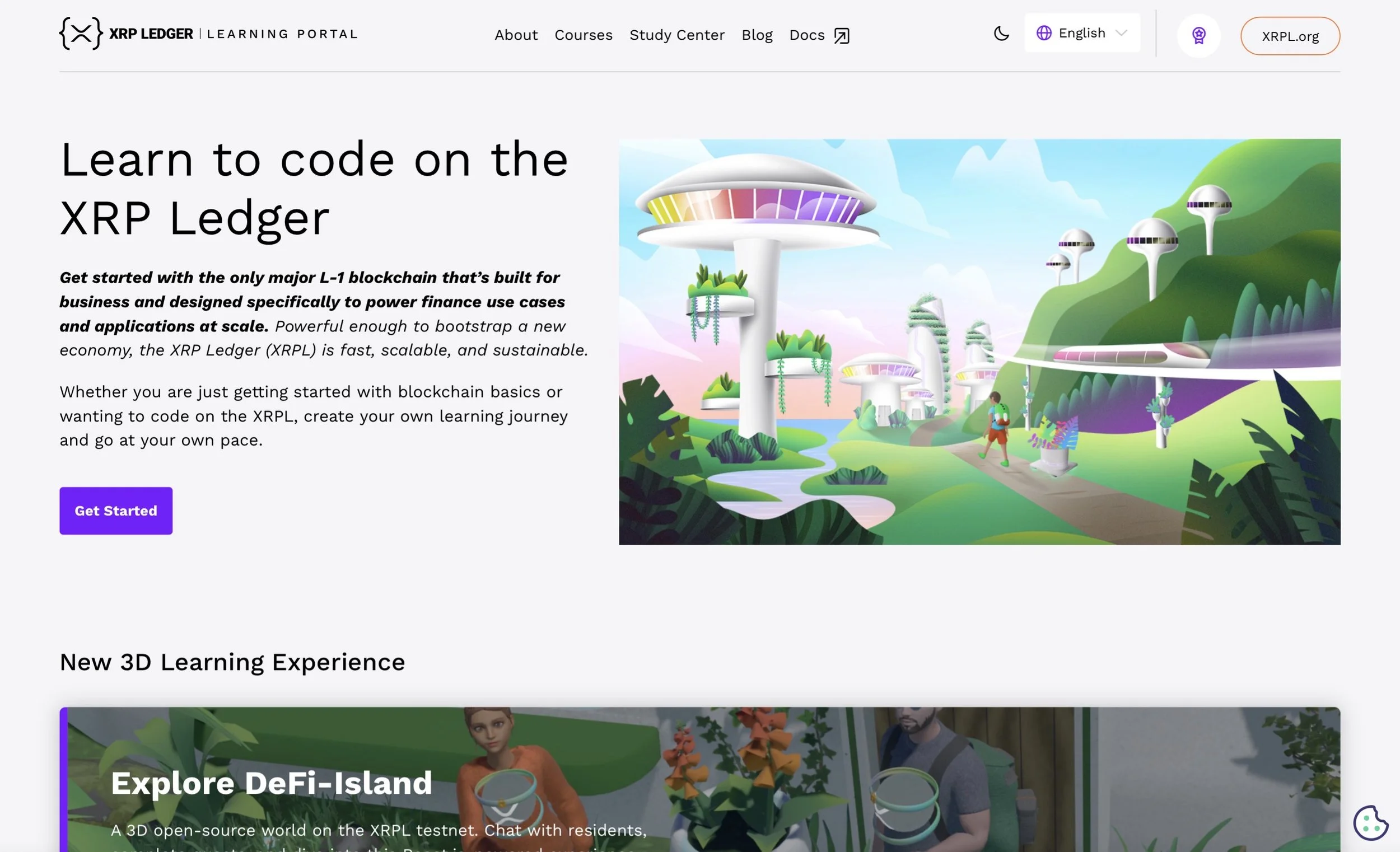
To support the next wave of developers, Ripple invested in a refreshed Developer Learning Portal, which is a critical part of the early conversion funnel. Working with Product Marketing, Brand Design, and the Developer Growth team, I conducted interviews and usability tests with developers to understand their preferred learning styles, pain points, and navigation challenges.
Outcome - Beyond improving core usability around navigation and calls-to-action, the research revealed clear preferences for how developers want to learn. These insights directly informed the creation of:
Bite-sized, modular courses
A sandbox console for hands-on experimentation
Early concepts for gamifying the learning experience
These enhancements strengthened onboarding for new developers and supported Ripple’s broader effort to grow the developer ecosystem, see below for artifacts.
Project 2 - API Architecture Strategy Research
For over a decade, Ripple’s core payments product operated on a monolithic API architecture. As new features and products were added, this architecture created growing operational strain that affected performance, reliability, and developer onboarding.
As part of a P0 initiative to evaluate a shift toward a microservices-based API architecture, I collaborated closely with Product, Engineering, Technical Writing, and Technical Services to conduct mixed-methods research:
A survey to N=65 internal customer-facing engineers
In-depth interviews with customer engineers, exploring integration workflows and pain points
Outcome - The research surfaced the table-stakes requirements for a microservices API, clarified internal and customer expectations, identified potential pitfalls, and ultimately validated the strategic push toward a microservices architecture. These insights helped reduce uncertainty around the transition and aligned cross-functional teams on the path forward, see artifacts below.
Project 1 - XRP Ledger Developer Learning Portal
Q1 2023
Tasks & Actions
Introduced usability testing to stakeholders from Marketing, Brand Design, and Developer Growth, many of whom had never participated in a research session before.
Gathered and prioritized stakeholder hypotheses, ensuring that the team was aligned on the right questions to explore during testing.
Brought stakeholders into the research process by inviting them to observe live sessions, facilitating weekly debriefs, and adjusting subsequent sessions based on what we learned together.
Presented findings at a company-wide meeting, reinforcing the importance of a user-centric approach in driving developer growth for this key initiative.
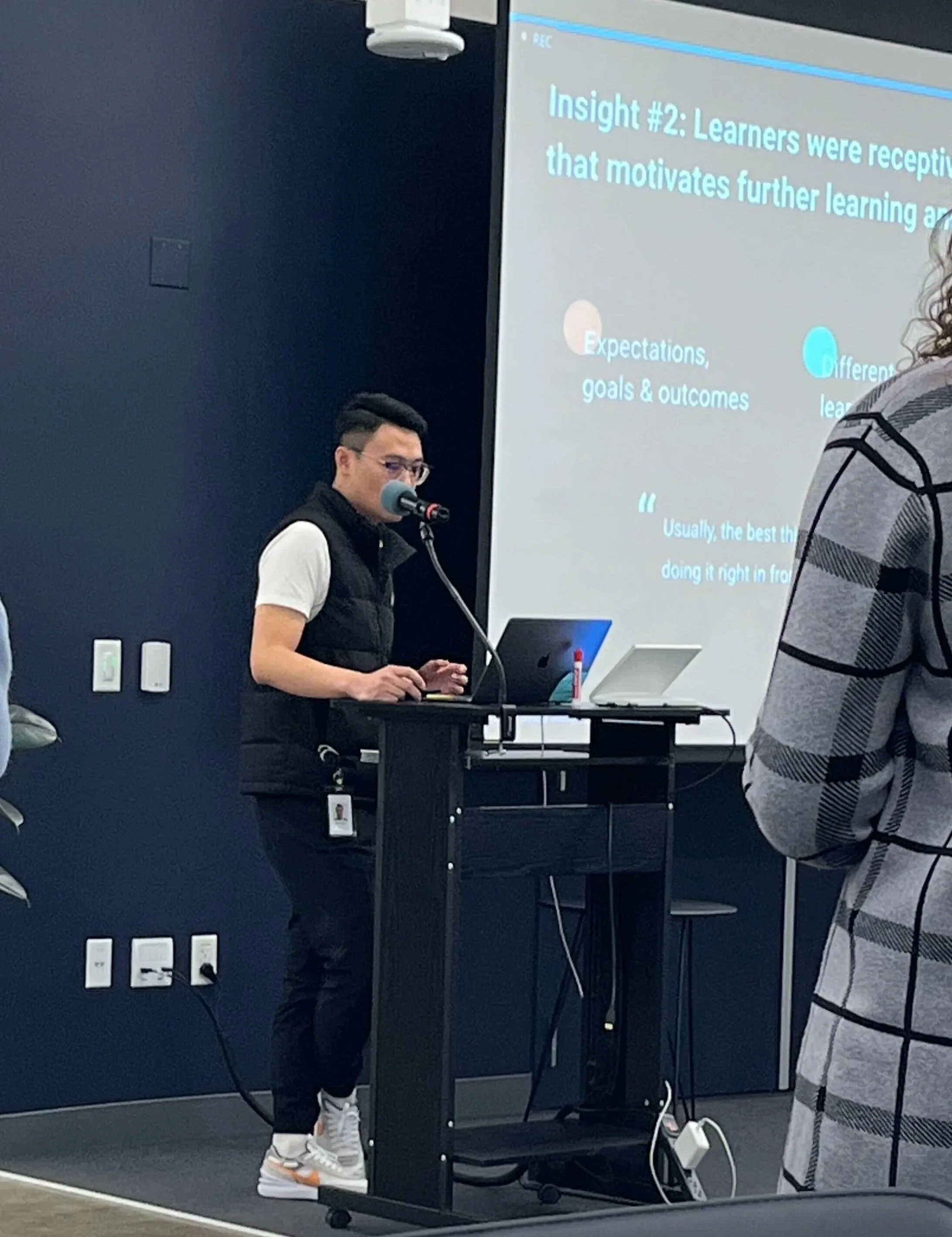
Present at the company meeting
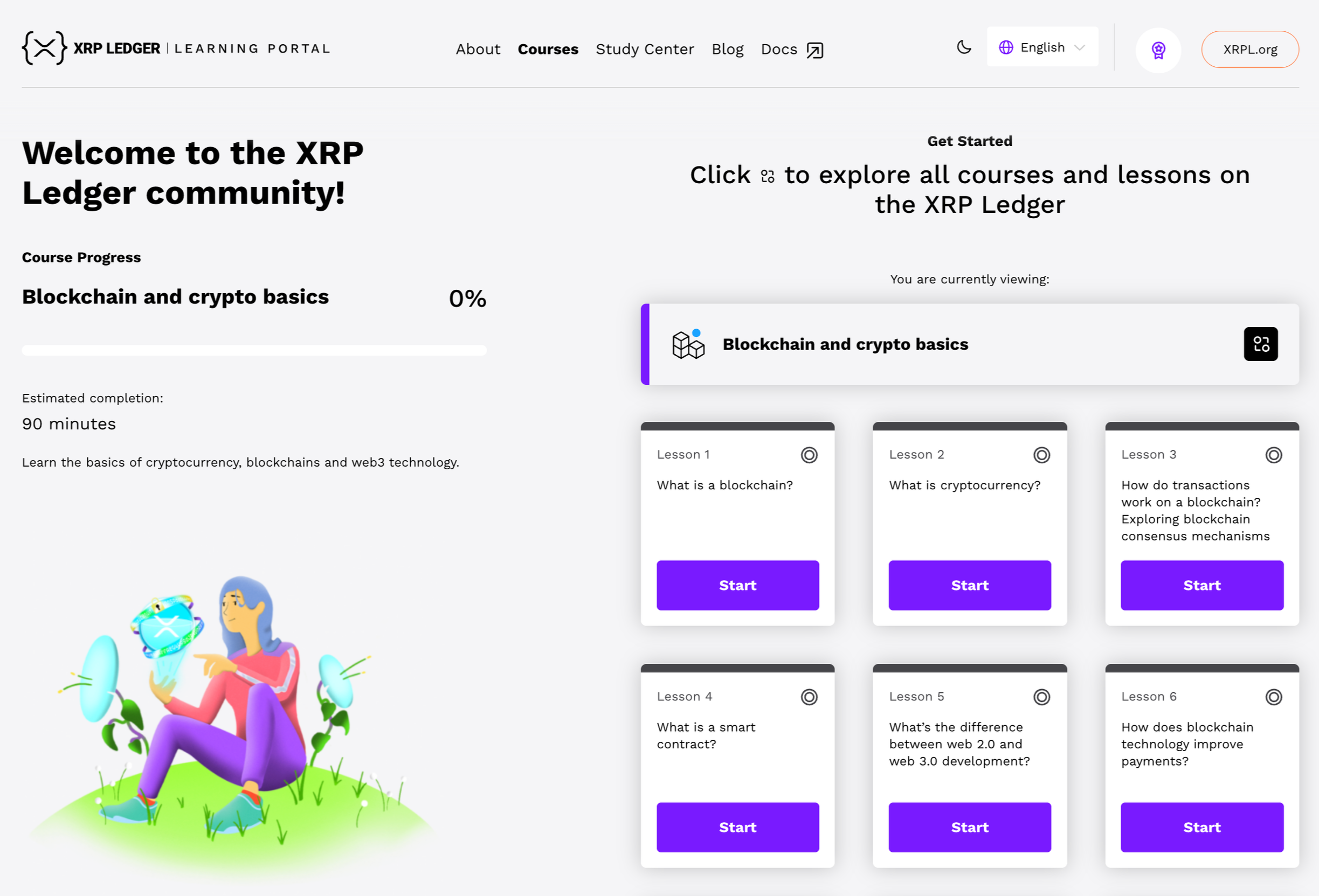
Bite-sized, modular courses were created based on findings
Project 2 - API Architecture Strategy Research
Q3 2023
Tasks & Actions
Phase 1 - Internal Survey
Conducted desk research to close knowledge gaps around API terminology and architectural patterns.
Partnered with HR to offer internal rewards and increase survey participation from customer-facing engineers.
Anticipated customer recruitment challenges by pre-recruiting customer-facing engineers to support outreach for Phase 2 interviews.
Used survey insights to shape the scope and focus of the customer interviews.
Phase 2 - Customer Interviews
Aligned with customer-facing partner engineers to understand each customer’s integration history, pain points, and desired outcomes; created tailored discussion guides for different customer profiles.
Brought stakeholders into the research journey by inviting them to observe sessions and participate in post-interview debriefs.
Presented findings to 12 Product Managers and 15 Engineering leaders, highlighting the urgency and strategic importance of transitioning from a monolithic API to a microservices architecture.
Brought together customer and user pain points to reveal the insight that made the developer onboarding experience smoother.
Before
114 API operations in a monolithic architecture
~8 weeks for technical integration
After
11 API operations in a microservices architecture
~3weeks for technical integration
Explain “API polling method” to non-technical audience